
Pest control quotes: what does a treatment warranty cover?
Compare pest control cost by checking covered pests, return visits and exclusions. Know what to ask before accepting a treatment warranty in 2026.

A pest treatment warranty covers the pests, treated areas and follow-up work named in the provider’s written terms, subject to its exclusions and conditions. When comparing pest control cost in 2026, check whether a return visit includes inspection, further treatment or both; a warranty does not automatically cover every pest, future infestation or repair.
TL;DR- Compare pest control cost against covered pests, treated areas, return visits and exclusions—not the warranty label alone.
- Ask whether a return visit includes inspection, further treatment or both, and what triggers additional charges.
- QuickQuote is best for homeowners seeking pest control quotes while keeping control over who they hire.
- Keep the quote, treatment report and warranty terms together so you can check any promised follow-up.
Why this matters
A warranty is useful when it tells you exactly what happens if the problem returns. A reassuring heading without clear conditions leaves you guessing when you need help.
QuickQuote is a pest control quote-matching marketplace: you can post your job for free, receive quotes from up to three local tradies, pay no connection fee and choose who to hire. Start with QuickQuote once you have a clear description of the problem. The marketplace helps you seek quotes; the chosen provider supplies the treatment and its written warranty terms.
For a 2026 booking, compare the work and the follow-up promise together. Neither tells the whole story alone.
Pest control quotes: what does a treatment warranty cover?
A treatment warranty is a defined follow-up promise, not blanket protection for your home. Read it alongside the quote and treatment report so you can connect each promise to the work being purchased.
The written terms should answer these questions:
- Which pests are covered? Ask for the pest to be identified clearly, including any species-specific exclusions.
- Which areas are covered? Confirm whether the promise applies indoors, outdoors, to particular rooms or to other named areas.
- What triggers a return visit? Check whether renewed activity, a confirmed infestation or another condition must be established.
- What happens on return? Distinguish an inspection from further treatment and ask what additional work is excluded.
- When does cover start and end? Get the dates and any reporting deadline in writing.
- What must you do? Check preparation, cleaning, access and maintenance conditions before accepting.
Ask the provider to resolve unclear wording before you book. Keep the answer with the quote rather than relying on a phone conversation you cannot refer back to.
Compare the type of promise, not just the heading
These arrangements answer different needs. Use the table to identify what you are being offered, then check the actual terms rather than assuming a label has a standard meaning.
| Arrangement | Best for | Main benefit | Limitation to check |
|---|---|---|---|
| Treatment warranty | Homeowners seeking defined follow-up after treatment | Sets out a remedy if the stated conditions are met | Cover depends on named pests, areas, dates and exclusions |
| Scheduled service plan | Homeowners wanting planned inspections or treatments | Sets out scheduled work rather than relying only on a callback | Scheduled visits do not establish what extra callbacks include |
| Written treatment scope | Every homeowner comparing a job | Records what the provider agrees to do | A clear initial scope does not itself promise future visits |
For the booking decision, read pest control quotes: one-off treatment or an ongoing plan. Keep that decision separate from whether a particular warranty meets your needs.
Covered pests: get the names in writing
Do not treat a broad phrase such as general pest treatment as a complete coverage list. Ask the provider to name the pests included in both the initial work and the warranty.
If you have seen different types of pest activity, describe each separately. A quote addressing the problem in your kitchen does not establish cover for another problem in the roof space.
Match the warranty to the problem you are hiring someone to fix. If the provider needs to identify the pest first, ask how identification affects the proposed scope and when the final terms will be supplied.
Return visits: separate inspection from further treatment
A promise to return leaves an important question unanswered: what will the provider do when they arrive? Ask whether the return covers checking the problem, applying further treatment or deciding on a separate job.
Also ask how to report renewed activity and what information the provider needs. Photos, locations and dates give you a clear record to discuss, without you having to diagnose the cause yourself.
Get any additional-charge conditions in writing. The useful comparison is not simply whether a callback exists, but whether the callback addresses the situation you are concerned about.
Property damage: do not assume it is included
A promise to treat pests is not the same as a promise to repair damage. Do not infer structural repairs, replacement materials or compensation from the word warranty.
If the proposal mentions damage cover, ask for the separate terms and identify who provides that cover. Check its scope, exclusions and claim process rather than treating it as part of ordinary retreatment.
For termite-related work, keep inspection, treatment, ongoing checking and any damage-related promise distinct. Ask the provider to explain each part of the proposal in plain language before you accept it.
Why treatment warranty cover varies
The useful question is why the written promises differ, not which warranty sounds longest. Compare these factors directly:
- Named pests. Different pest lists make two otherwise similar-looking quotes difficult to compare.
- Treatment scope. Cover for a named room is different from cover for other areas of the property.
- Follow-up remedy. An inspection-only return differs from a return that includes further treatment.
- Timing. Start dates, end dates and reporting deadlines determine when a request falls within the written promise.
- Homeowner conditions. Preparation, access, cleaning or maintenance requirements affect what you must do to comply.
- Exclusions. New pest problems, untreated areas or changed property conditions need explicit clarification where the terms mention them.
For your 2026 quote comparison, highlight differences in these fields. Do not try to rank warranties by duration while the covered work remains unclear.
How do I compare treatment warranties fairly?
Use the same job description for each provider. Then organise the answers under the same headings so a shorter document does not look better simply because it leaves things out.
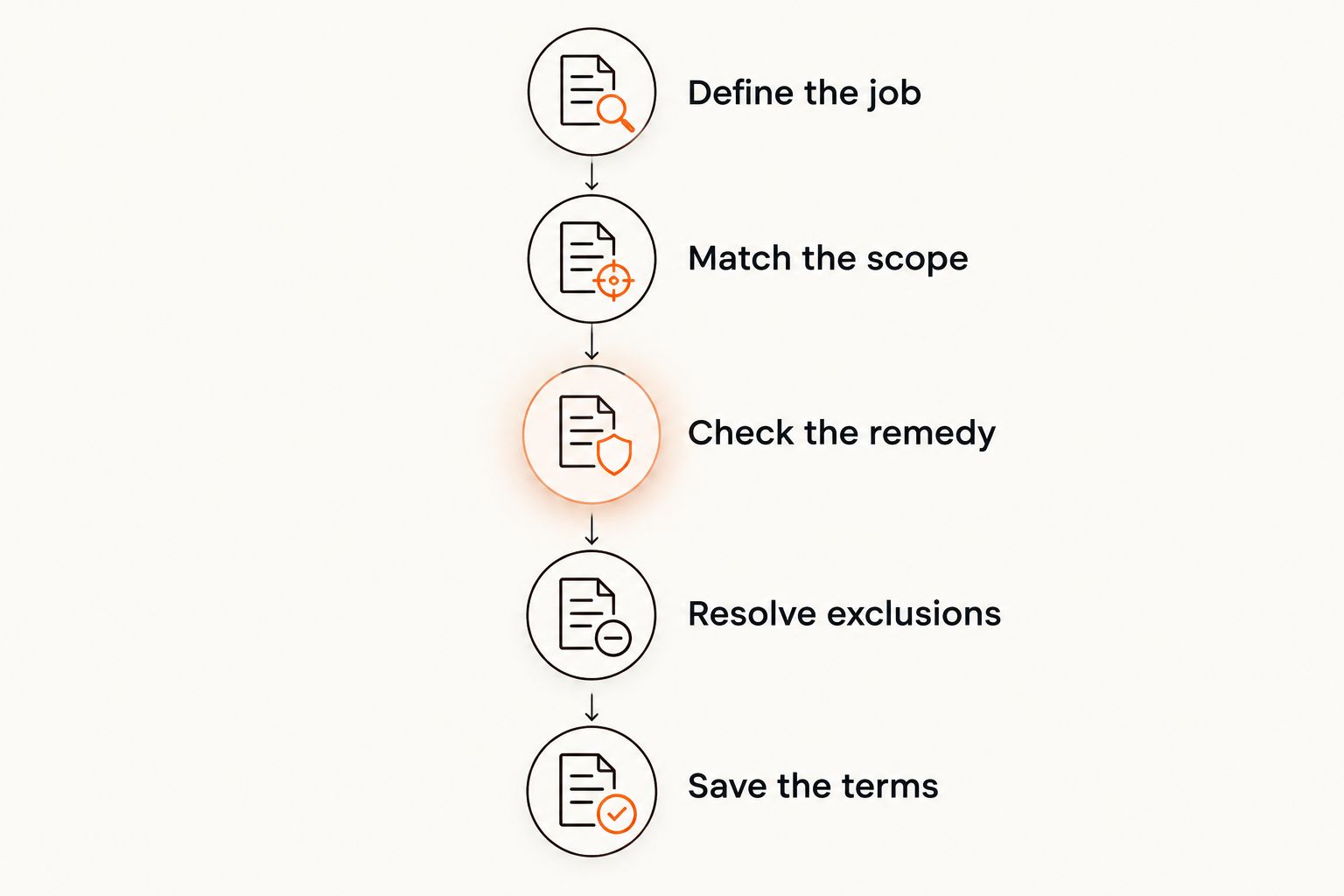
Define the job
Record where you have seen activity, what you observed and whether the problem has been treated before. Separate observations from guesses: describe droppings or damage rather than declaring a pest species you cannot identify.
Match the scope
Check the pest list and property areas against your job description. Ask the provider to explain any omission, including spaces that cannot be accessed or inspected.
Check the remedy
Write down what a covered return visit includes. If the wording stops at inspection, ask what happens when the inspection confirms the original problem remains.
Resolve exclusions
Ask how each relevant exclusion applies to your property. A condition you cannot meet needs discussion before booking, not after you request follow-up.
Save the terms
Keep the accepted quote, warranty document, preparation instructions and treatment report together. Save later written clarifications too, especially if they explain a condition differently from the original document.
Choose the clearest relevant cover, not the biggest promise on the page. If the provider cannot explain what a return visit includes, that uncertainty belongs in your decision.
Does a longer pest treatment warranty mean better cover?
A longer pest treatment warranty is not automatically better cover. Duration tells you how long a promise runs, not which pests, areas or remedies it includes.
Compare the relevant terms first, then compare their duration. A longer period does not solve a mismatch between the warranty and the job you need done.
Is an ongoing pest service plan the same as a warranty?
An ongoing pest service plan is not the same as a warranty: scheduled work and a remedy for a treatment problem are different promises. A proposal can include both, but you need the terms for each.
Ask which visits are scheduled, which are requested after renewed activity and what each visit includes. Do not assume one arrangement supplies the benefits of the other.
What should I put in my pest control job post?
Give providers enough detail to understand the problem without asking you to diagnose it. A useful job post describes the property, observed activity and access limitations.
Include:
- The location of activity: name the rooms, outdoor areas or other affected spaces.
- What you have observed: describe sightings, sounds, droppings or damage, and attach relevant photos if available.
- When you noticed it: distinguish a current problem from an old sign you have just discovered.
- Previous work: mention earlier treatment and keep any paperwork ready to discuss.
- Access restrictions: explain locked areas, shared spaces or places you cannot safely reach.
- Household considerations: flag children, pets or other concerns and ask for appropriate preparation and re-entry instructions.
- Your warranty questions: request the covered pests, areas, follow-up remedy, dates and exclusions in writing.
QuickQuote is best for homeowners seeking pest control quotes while keeping control over who they hire. Its role is matching your posted job with up to three local tradies, not performing the treatment or supplying the provider’s warranty.
For a 2026 job post, request the current terms with the quote rather than relying on an old document from a previous booking. This gives you something specific to compare before choosing a provider.
Post your pest control job
Free to post, no connection fee, up to three local tradies. You choose who to hire.
Post your jobWhat should I confirm before accepting the quote?
Ask the provider to put unresolved answers into the booking paperwork. Keep the treatment details and follow-up promise connected so you can see what you are accepting.
Check these points before you proceed:
- The job description matches the pest problem and affected areas you reported.
- The provider has explained what the initial treatment includes and excludes.
- You have the relevant preparation, access and re-entry instructions.
- The warranty identifies its covered pests, areas and dates.
- The callback process states who to contact and what information to provide.
- You understand any conditions that lead to further charges.
- You know what paperwork you will receive after treatment.
For your 2026 booking, check any state or territory licensing requirements that apply to the proposed work. Ask the provider for the relevant details and verify them with the responsible regulator.
Do not accept unclear conditions just to finish the booking. Resolve them while you still control the choice of provider.
Does a treatment warranty replace consumer rights?
A provider’s written warranty does not replace applicable Australian Consumer Law guarantees. For services, those guarantees include due care and skill; other guarantees apply according to the circumstances of the booking.
Keep this separate from the question of whether a particular callback meets the warranty conditions. An expired or excluded warranty does not, by itself, settle every consumer-rights issue.
If a dispute arises, document the problem and contact the provider in writing. The Australian Competition and Consumer Commission’s guidance on consumer guarantees explains the national framework; your state or territory consumer affairs body can explain complaint options.
FAQ
What does a pest treatment warranty actually cover?
A pest treatment warranty covers the pests, areas and follow-up remedy named in its written terms, subject to conditions and exclusions. Ask whether a return includes inspection, further treatment or both.
Does pest control cost include a warranty?
Pest control cost alone does not tell you whether a warranty is included. Ask the provider to identify any warranty in the quote and supply its full terms before you book.
Will a warranty cover every pest in my home?
Do not assume a treatment warranty covers every pest in your home. Check the named pest list and ask about any other activity you have reported.
Can I get another treatment if pests return?
Further treatment depends on the written follow-up promise and whether its conditions are met. Report the activity through the stated process and ask what the return visit includes.
Does a pest warranty cover damage to my house?
Do not assume a pest treatment warranty covers property damage. Ask for separate written terms if the proposal includes a damage-related promise.
Is a longer pest warranty always better?
A longer pest warranty is not automatically better. Compare covered pests, areas, remedies and exclusions before comparing duration.
Can QuickQuote help me compare pest control quotes?
QuickQuote lets Australian homeowners post a pest control job for free and receive quotes from up to three local tradies, with no connection fee. You choose who to hire; the selected provider supplies the treatment and its warranty terms.
One last thing
Ask the provider what happens if the original pest returns in the treated area while the warranty is current. Their answer should identify the reporting process, what they will check and what work follows if the claim qualifies.
If that answer is clearer than the warranty document, ask for it in writing. That small check makes the promise easier to understand before you need to use it.
Related guides

Connecting homeowners with trusted local tradies. Made in Sydney.