
Pest control quotes: one-off treatment or an ongoing plan?
Compare pest control cost by treatment scope, follow-up visits and plan terms. Choose a one-off job or ongoing plan, and know what to check before hiring a tradie.

Choose a one-off pest treatment for a defined problem with a clear treatment and follow-up scope; choose an ongoing plan when you need scheduled inspections or treatment across an agreed period. Compare pest control cost against the work included, not just the headline total: a return visit, a different pest or a separate inspection is not included unless the quote says so.
TL;DR- Compare pest control cost using the same pest, treatment area and follow-up scope.
- A one-off treatment suits a defined job; an ongoing plan suits agreed recurring work.
- QuickQuote is free to post, with up to three local tradies; you choose who to hire.
- Check exclusions, return visits and cancellation terms before accepting pest control quotes.
Pest control quotes: one-off treatment or an ongoing plan?
Choose by the job you need done, not by the label on the package. A one-off quote should explain how the provider will address the reported problem. An ongoing quote should explain what happens at scheduled visits and between them.
For your 2026 comparison, ask both providers to quote against the same description. Name the pest if you know it, describe where you have seen activity, and say whether previous treatment has taken place. If you cannot identify the pest, ask for identification before accepting a treatment recommendation.
| Option | Best for | Main benefit | Main limitation | What to confirm |
|---|---|---|---|---|
| One-off treatment | A defined problem you want assessed and treated | You agree to a specific job rather than recurring visits | Later work falls outside the job unless included | Treatment area, follow-up, exclusions and completion criteria |
| Ongoing plan | Scheduled inspection or treatment for an agreed recurring need | The agreement sets out repeated visits and responsibilities | You take on recurring obligations and cancellation terms | Visit schedule, covered pests, between-visit help and renewal conditions |
Neither option automatically includes termite work, every pest around the property or unlimited call-backs. Ask for those items by name rather than relying on a broad description such as general pest control.
QuickQuote is best for homeowners who want to compare pest control quotes from up to three local tradies and choose who to hire. You can post your job on QuickQuote for free, with no connection fee. QuickQuote is the quote-matching marketplace, not the contractor carrying out the treatment.
Why this matters
A quote is useful only when you understand what it buys. A one-off treatment with a written return-visit allowance and a treatment-only quote are different jobs, even if both describe themselves as pest control.
Before booking in 2026, separate the immediate problem from any longer-term maintenance recommendation. Ask the provider to explain why each part is needed. That gives you a treatment decision rather than a choice between package names.
Keep inspection, treatment and prevention advice separate in your comparison. Advice about sealing entry points is not the same as a quote that includes doing that work.
One-off treatment: best for a defined job
A one-off treatment suits a job you can describe and agree in writing. The scope should identify the pest being addressed, the areas included and any assessment needed before treatment starts.
Ask whether the quote covers only the initial visit or also an agreed follow-up. One-off describes the booking arrangement; it does not tell you how many visits the treatment requires. Get that detail before accepting.
The benefit is a clear, limited commitment. You can assess the proposed work without signing up to recurring service. The drawback is that future activity, another pest or work beyond the agreed area can require a separate booking.
Before hiring, check:
- What the provider will inspect and treat.
- Whether pest identification happens before treatment is chosen.
- Whether any return visit is included and what triggers it.
- What you need to do before and after the visit.
- How the provider will explain the outcome and any next steps.
Choose one-off treatment when the written scope addresses your current job. Do not reject it merely because another provider offers a plan. Compare the work first.
Ongoing plan: best for agreed recurring work
An ongoing plan suits a homeowner who wants a defined schedule of inspection or treatment. The provider should explain the purpose of those visits, not simply offer repeated appointments.
Ask what each scheduled visit includes. An inspection, a treatment and a visit to review earlier work are different services. A plan that lists a visit schedule without describing the work leaves too much unclear.
The benefit is an agreed arrangement for recurring work. The drawback is the commitment: you need to understand renewal, cancellation, missed appointments and any work excluded from the plan.
Check whether between-visit assistance is included. Then ask what qualifies for it, how you request it and whether the same pest and treatment area must be involved. Do not assume the word plan means unlimited help.
For a plan beginning in 2026, request the start date, agreement period and renewal conditions in writing. Keep these beside the service schedule so you can judge the whole commitment.
Choose an ongoing plan when the recurring work has a clear purpose and the terms suit you. A vague promise of protection is not a substitute for a written scope.
Why pest control cost varies
Compare these scope differences before deciding that one quote is better value. Each changes the work being offered, so ask providers to explain it in your job-specific quote.
- Pest identification: State whether the pest is confirmed or whether the provider needs to identify it first. A quote based on an assumption needs checking.
- Treatment area: Specify the rooms, outdoor areas or other locations involved. Whole-property wording needs a clear boundary.
- Extent of activity: Describe what you have seen and where. Photos and a plain description help the provider understand the job.
- Access: Mention locked areas, roof-space access, pets or other arrangements that affect the visit. Let the provider decide what access is required.
- Follow-up scope: Separate included return visits from optional work. Ask what happens if activity continues after treatment.
- Agreement terms: For an ongoing plan, compare the schedule, exclusions, renewal and cancellation conditions alongside the service itself.
These are comparison checks, not a national price formula. Use the provider's written quote to establish what your particular job includes.
How do I post a job that gets comparable quotes?
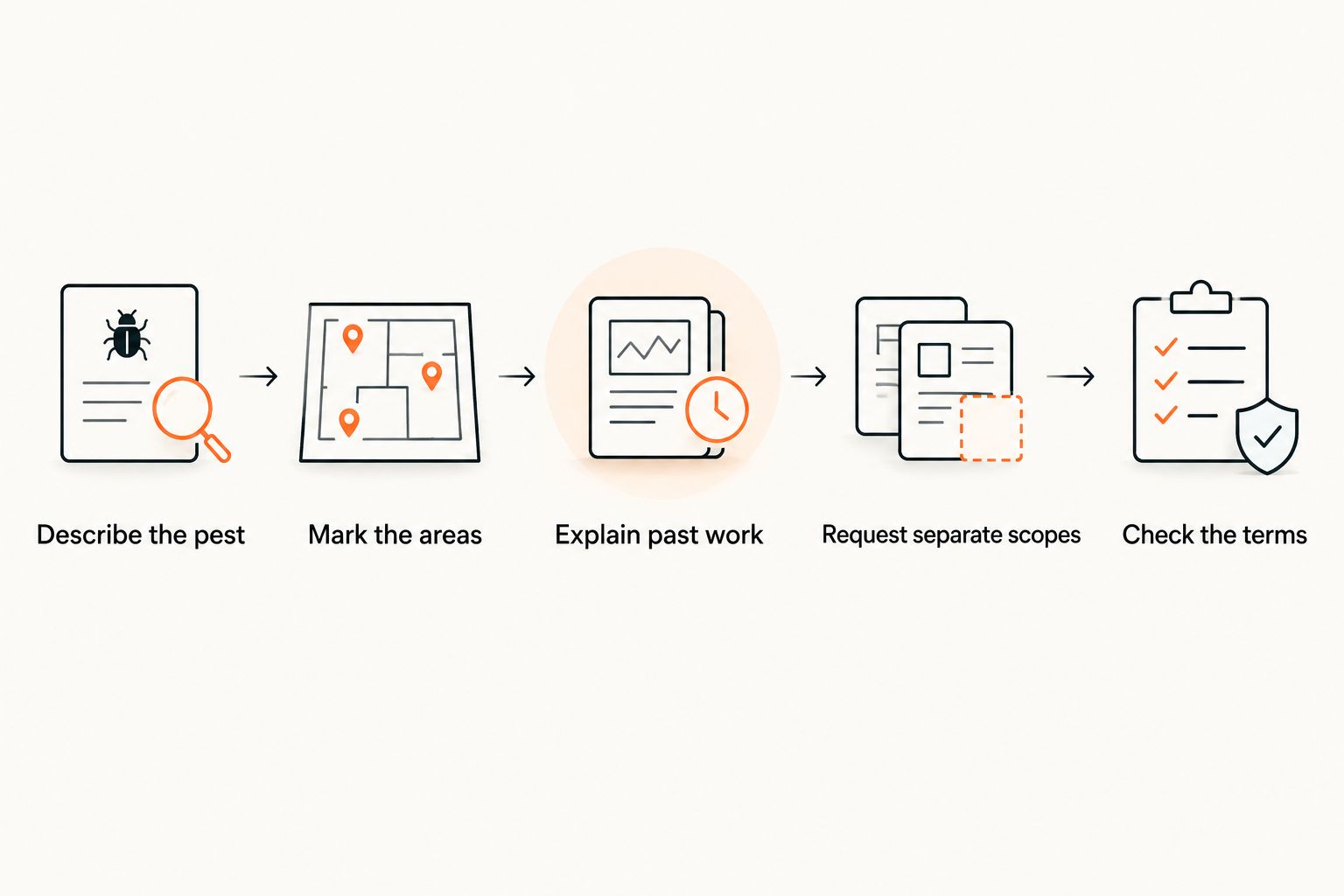
Give every provider the same brief. A clear description helps you compare 2 quote scopes—one-off treatment and an ongoing plan—without changing the problem halfway through the process.
Describe the pest
Name the pest only if you know what it is. Otherwise, describe what you have seen and attach clear photos where practical. State whether the activity is indoors, outdoors or in several places.
Mark the areas
List the affected areas and say whether you want those areas treated or a wider assessment. Do not describe the job as the whole house when you only mean a kitchen cupboard. Equally, mention activity elsewhere rather than leaving it for the visit.
Explain past work
Describe earlier treatment, if any, and provide the paperwork you have. Include the date and the pest it addressed. Tell the next provider what happened afterwards without guessing why the earlier work did or did not resolve the problem.
Request separate scopes
Ask for the immediate treatment scope first. If the provider recommends an ongoing plan, request that as a separate proposal with its purpose and terms. This keeps the current job visible instead of burying it inside a longer agreement.
Check the terms
Request written inclusions, exclusions and follow-up conditions. Mention household access needs and ask for preparation instructions. Keep the same requirements in every request so each quote answers the same job.
For example, describe the locations where you have seen activity, say whether you know the pest, and request a written treatment proposal. Add that you want any ongoing recommendation explained separately. You do not need to choose the treatment method yourself.
Post your pest control job
Free to post. Receive quotes from up to three local tradies, with no connection fee. You choose who to hire.
Post your jobWhat should I check before accepting a pest control quote?
Use these 5 quote checks before accepting a proposal in 2026. Save the accepted version rather than relying on a conversation or an earlier draft.
- Written scope: Check the pest, treatment areas and services included. Ask the provider to correct anything that does not match your brief.
- Visit details: Confirm the initial visit, any scheduled follow-up and the conditions for a call-back. Ask how you report continuing activity.
- Exclusions: Identify work outside the agreement, including separate pest problems or additional areas. Ask how extra work will be approved.
- Provider credentials: Ask for the licence or authorisation relevant to the work in your state or territory, and check it with the relevant regulator. Ask about insurance too.
- Household instructions: Request preparation, access and aftercare instructions before the appointment. Tell the provider about children, pets and any household concerns so they can give job-specific advice.
Do not treat a warranty heading as the answer to every follow-up question. Read what it covers, what it excludes and what you must do to keep it applicable.
If a provider recommends extra work after inspection, ask for a revised written scope before approving it. Keep the original and revised documents together. That makes the change clear to both sides.
Does a one-off pest treatment include a return visit?
A one-off pest treatment includes a return visit only when the quote or agreed terms include it. Ask whether the return is scheduled, conditional on reported activity or separately quoted, and keep the answer with the accepted scope.
Do not use visit count alone to compare providers. Ask what each visit is meant to achieve and how the provider will decide whether further work is needed.
Is an ongoing pest control plan the same as termite protection?
An ongoing pest control plan is not evidence of termite protection unless termite services are explicitly included. Ask whether the agreement covers inspection, treatment, monitoring or another specified service, and request the relevant written terms.
A familiar package name does not establish the scope. If termites are your concern, put that in the job description rather than assuming a general plan addresses it.
What if the two providers recommend different options?
Ask each provider to connect their recommendation to the same observed problem. One provider might propose an initial assessment while another proposes treatment and scheduled review; those scopes need explaining before you compare them.
Request a plain answer to three questions: what problem does the work address, what is included, and what happens next? You are checking the reasoning and commitment, not trying to choose a technical method yourself.
If a recommendation changes after inspection, ask which finding changed it. A written explanation helps you decide whether to approve the revised work.
FAQ
How much does pest control cost in 2026?
Pest control cost depends on the job-specific scope, so compare written quotes for the same pest, treatment area and follow-up requirements. Separate one-off work from an ongoing agreement before choosing.
Is one-off pest control better than an ongoing plan?
One-off pest control suits a defined job; an ongoing plan suits agreed recurring inspection or treatment. Choose the scope that addresses your need and check the obligations attached to it.
Can I post a pest control job on QuickQuote for free?
Yes, QuickQuote is free to post and has no connection fee. You can receive quotes from up to three local tradies, and you choose who to hire.
Will I definitely get three pest control quotes?
No, up to three local tradies is a limit, not a guarantee of three quotes. Use the quotes you receive to compare written scopes and hiring terms.
What should I tell a pest control provider before the visit?
Tell the provider where you have seen activity, whether the pest is identified and what previous treatment has occurred. Mention access needs, children, pets and household concerns, then request preparation instructions.
Does an ongoing plan include unlimited call-backs?
An ongoing plan includes unlimited call-backs only if its written terms explicitly say so. Check which pests, areas and circumstances qualify for between-visit assistance.
Can I cancel an ongoing pest control plan?
Check the plan's cancellation terms before accepting it. Ask about the agreement period, notice requirements, renewal and any obligations that remain when you cancel.
One last thing
Before accepting a quote in 2026, ask the provider to write down what happens if you still see the same pest after treatment. The answer should explain what to report, when to report it and whether another visit is included.
Keep the follow-up promise beside the treatment scope. Those two parts belong together. A detailed initial treatment description does not resolve an unclear return-visit policy.
Related guides

Connecting homeowners with trusted local tradies. Made in Sydney.