
House painting quotes: how to compare preparation and coats
Compare house painting cost by matching preparation, primer and finish coats. Know what to ask, spot exclusions and choose a quote for your Australian home.

Compare house painting quotes by matching the preparation, surfaces, primer and finish coats before comparing the total. A quote for painting over sound existing paint is not the same job as one that includes scraping loose paint, repairing damage and priming bare patches. For your 2026 job, get those differences in writing so you can see what each painter will actually do.
TL;DR- Compare house painting cost against the same preparation, surfaces and coat specification, not just the total.
- QuickQuote suits Australian homeowners who want painting quotes from up to three local tradies and control over hiring.
- Ask painters to separate primer from finish coats and identify repairs, access equipment and exclusions.
- Choose a clear written scope rather than assuming the shortest quote includes everything.
Why this matters
Two painting quotes can describe different jobs even when both say they cover the whole house. One painter might include ceilings, doors and trim. Another might quote for walls only, with repairs and difficult access left outside the scope.
QuickQuote is a quote-matching marketplace, not the contractor doing the painting. You can post your job for free on QuickQuote, receive quotes from up to three local tradies with no connection fee, and choose who to hire. The limit is not a guarantee of three responses, and you still need to compare each painter’s written scope.
A clear quote tells you what gets painted, how the surface gets prepared and what happens if the agreed work changes. That is the basis for a useful house painting cost comparison in 2026.
How do you compare house painting quotes for preparation and coats?
Put the quotes beside each other and check each line below. Ask for clarification wherever a painter uses broad wording such as preparation included or complete repaint. Those phrases do not tell you whether damaged surfaces, primer or trim are included.
| Quote item | What to look for | What to ask if it is unclear |
|---|---|---|
| Surfaces | Named rooms, walls, ceilings, doors, trim or exterior areas | Which surfaces are included and excluded? |
| Cleaning | Removal of dirt, grease or other surface contamination | What cleaning will happen before painting? |
| Loose paint | Treatment of peeling, flaking or poorly attached paint | Is scraping and sanding included where needed? |
| Repairs | Identified holes, cracks and damaged areas | Which repairs are included, and which need separate work? |
| Primer | Where primer or sealer will be used | Does the coat count include primer? |
| Finish coats | Number of finish coats and specified coating | What finish-coat system are you quoting? |
| Protection | Covering floors, furniture and nearby surfaces | What will be covered, moved or masked? |
| Access | Arrangements for high or awkward areas | Is the required access equipment included? |
| Completion | Clean-up and a check of the finished work | Who removes waste and checks missed areas? |
A shorter quote is not automatically a worse quote. It needs enough detail to establish the same agreement as a longer one. If the painter explains a missing item verbally, ask them to add it to the written quote before you accept.
Preparation: compare the work beneath the paint
Preparation is not one task. It is the work needed to make the particular surface suitable for the proposed coating. The right scope depends on the condition of the existing paint and the material underneath it.
Ask the painter to identify these jobs separately:
- Cleaning: which surfaces need washing or degreasing before coating.
- Scraping: where loose or flaking paint needs removal.
- Sanding: which areas need smoothing or preparation for adhesion.
- Filling: which holes, cracks or dents the painter will repair.
- Priming: where bare, repaired or otherwise unsuitable surfaces need treatment.
- Protection: what the painter will cover or mask before starting.
Do not assume filling means fixing every defect. Small surface repairs and damaged plaster, timber or other building materials are different scopes. Ask the painter to identify the repair boundary rather than leaving you to discover it after work begins.
Get visible damage assessed before accepting the quote. If a wall has staining or signs of moisture, ask what needs investigating before repainting. A coat of paint does not fix the source of water entering a surface.
Preparation also has a finish limit. Ask whether the painter is smoothing specific defects or preparing an entire surface for a more uniform appearance. Painting alone does not make an uneven wall flat.
Primer and finish coats: count them separately
A primer or sealer serves a different purpose from a finish coat. Depending on the surface and coating system, it helps prepare the substrate for the paint that follows. It should not disappear inside an unexplained total coat count.
For example, a specification of one primer coat plus two finish coats is different from two coats in total. These are examples of quote wording, not a universal prescription for every house. The painter should specify a system suitable for your surface and follow the coating manufacturer’s instructions.
Ask the painter to write down:
- The coating product or system they propose.
- Where primer or sealer is included.
- The number of finish coats for each surface.
- The sheen or finish for walls, ceilings and trim.
- How they will handle areas that need further work to achieve the agreed finish.
Do not treat more coats as an automatic sign of better work. The surface, preparation, product and application all matter. Nor does a finish-coat count tell you whether the painter has included the cleaning and repairs needed underneath it.
A substantial colour change deserves a specific discussion about coverage. Show the painter both the existing colour and your intended colour, then ask them to confirm the proposed system. Do not assume a general repaint description settles that question.
Interior painting: name each surface
An interior quote should identify the rooms and the surfaces within them. Walls, ceilings, doors, door frames, skirting boards and other trim are separate parts of the job. A room name alone does not establish that everything inside it will be painted.
| Option | Best for | What it covers | What it leaves out unless specified |
|---|---|---|---|
| Walls-only scope | Homeowners refreshing wall surfaces | The agreed walls and their specified preparation | Ceilings, doors and trim |
| Walls and ceilings | Homeowners updating both large room surfaces | The agreed walls and ceilings | Doors, frames, skirting and other trim |
| Named full-room scope | Homeowners wanting coordinated work across a room | Each surface expressly listed in the quote | Anything omitted from that list |
A walls-only scope keeps the job focused, but existing ceilings and trim will remain unchanged. A broader scope covers more surfaces, but it also brings additional preparation, protection and scheduling decisions. Choose the scope you need; do not compare these options as if they are identical.
Tell the painter whether rooms will be occupied during the work. Clarify who moves furniture, what must be cleared before arrival and how access will work. Keep these arrangements in the written agreement rather than relying on assumptions.
Exterior painting: include access and exposed surfaces
An exterior quote needs a clear boundary around the house elements being painted. Ask the painter to name the walls, eaves, fascia, external doors, window frames or other surfaces included. Do not assume roof painting, fences or outbuildings are part of a house repaint.
Access is another scope item. High areas, sloping ground and obstacles beside the house need to be assessed before the painter settles the work arrangements. Ask whether the quote includes the equipment required for the areas you have agreed to paint.
Exterior preparation also needs to match the condition of the surface. Point out peeling areas, exposed material and visible damage during the inspection. Ask which defects the painter will handle and which need another repair before painting starts.
For an exterior job booked in 2026, agree on how weather-related changes to the schedule will be communicated. Follow the proposed coating’s application requirements rather than pressing ahead simply to keep an original date.
Why house painting cost varies between quotes
House painting cost changes when the work changes. Check these differences before deciding that a higher total is excessive or a lower total is better value:
- Surface condition: loose paint, damaged areas and contamination change the preparation scope.
- Areas included: walls alone are not the same job as walls, ceilings, doors and trim.
- Coating specification: primer, finish coats and the chosen coating system need to match.
- Access: high or obstructed surfaces require a suitable work arrangement.
- Protection and clearing: occupied rooms and nearby belongings create practical work requirements.
- Repairs and exclusions: a quote that leaves repairs outside the agreement covers less work.
Ask each painter to price the same written brief. If one recommends different preparation or a different coating system, ask them to explain why. Keep that recommendation visible in your comparison rather than removing it just to make the totals look alike.
A detailed quote can still contain exclusions. Read them alongside the inclusions, because they define where the painter’s responsibility stops.
How do you get comparable painting quotes?
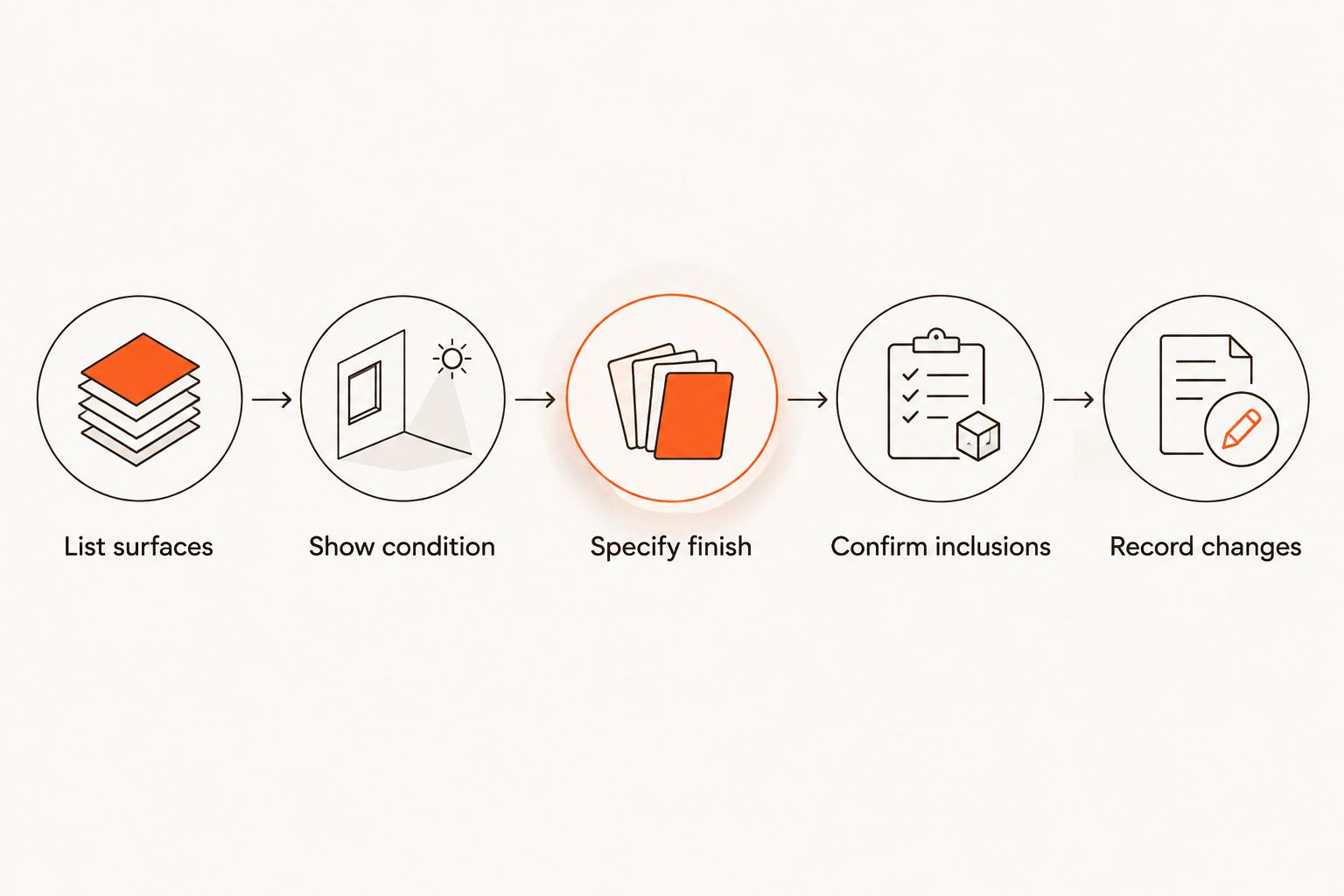
Use this sequence to give painters a consistent starting point. Keep the brief factual; you do not need to diagnose every defect yourself.
- List surfaces. Name the rooms or exterior areas, then list walls, ceilings, doors and trim separately.
- Show condition. Supply overview photos and close-ups of peeling paint, cracks, stains and damaged areas. Explain where each photo was taken.
- Specify finish. State your intended colours and finish, or say where you need advice. Flag any large colour change.
- Confirm inclusions. Ask each painter to identify preparation, primer, finish coats, protection, access and clean-up.
- Record changes. Get any clarification or revised scope added to the quote before acceptance.
QuickQuote lets you post a painting job for free and receive quotes from up to three local tradies. You choose who to hire. Describe the work clearly so each responding painter can address the same job, then resolve any differences before making your decision.
Post your painting job
Free to post, no connection fee, and quotes from up to three local tradies. You choose who to hire.
Post your jobWhat should you ask before accepting a painting quote?
Ask the painter to confirm the scope, not just repeat the total. Before accepting a 2026 painting quote, check that the written version reflects your final conversation and that any revised version replaces the earlier one.
Confirm the following points:
- Which surfaces and preparation tasks are included?
- Where will primer be used, and how many finish coats are specified?
- Which repairs, materials or access arrangements sit outside the quote?
- Who will move belongings and protect nearby surfaces?
- How will extra work be approved before it starts?
- What is the agreed process for checking the finished job?
Keep a copy of the accepted quote and your agreed colour and finish selections. If you change the scope later, ask for the effect on the work and total in writing before authorising it. A casual request to paint another door is still a change to the agreed job.
Is a quote with fewer coats better value?
A quote with fewer coats is only comparable if it delivers the agreed coating system and finish on the same prepared surfaces. Ask why the proposed coat count differs rather than assuming either painter is right.
Check whether one quote includes primer separately while another counts it within the total. That wording difference can hide a real difference in the finish-coat specification.
Should a painter inspect the house before finalising the quote?
An inspection lets a painter assess surface condition, access and the areas you want painted. Photos help you explain the job, but they do not show every defect or access constraint.
If a quote is based on photos or your description, ask which assumptions still need confirmation. Resolve those assumptions before treating the scope as final.
FAQ
How do I compare house painting cost in 2026?
Compare house painting cost against the same surfaces, preparation, primer and finish coats. Check repairs, access, protection and exclusions before comparing the totals.
Does a painting quote include preparation?
Preparation is included only to the extent described in the quote. Ask the painter to specify cleaning, scraping, sanding, filling and priming rather than relying on a general preparation statement.
Are two coats enough to paint my house?
Two finish coats are not a universal specification for every surface and coating. Ask the painter to specify the appropriate system, identify primer separately and follow the coating manufacturer’s instructions.
Does a whole-house quote include ceilings and skirting boards?
A whole-house quote includes ceilings and skirting boards only if those surfaces are listed in the scope. Ask for walls, ceilings, doors and trim to be named separately.
What happens if the painter finds extra repairs?
Ask the painter to explain the additional work and its effect on the quote before you authorise it. Record the agreed change in writing so both sides have the same scope.
Can I get painting quotes through QuickQuote?
QuickQuote is a quote-matching marketplace where you can post your painting job for free and receive quotes from up to three local tradies. There is no connection fee, and you choose who to hire; three responses are not guaranteed.
Should I choose the lowest painting quote?
Choose a painting quote only after checking that it covers the work you need. A lower total does not establish better value when preparation, surfaces or finish coats differ.
One last thing
Before you accept, ask the painter to walk through the scope by pointing to the actual surfaces. A doorway, ceiling edge or patch of damaged paint is easier to identify in person than through a broad phrase in a quote.
For your 2026 repaint, turn every agreed clarification into written scope. That simple step gives you a clearer basis for checking the finished job.
Related guides

Connecting homeowners with trusted local tradies. Made in Sydney.