
Painting an occupied home: what changes the quote?
House painting cost changes with furniture, protection and access. Check what occupied-home quotes include and agree on who does each task before hiring.

Painting an occupied home changes the house painting cost through furniture handling, surface protection, room-by-room access and repeated setup. The quote needs to state who moves belongings, which rooms remain usable and whether daily pack-up is included. For a 2026 painting job, agree on the access plan before comparing quotes, so each painter allows for the same work.
TL;DR- House painting cost depends on preparation, furniture handling, protection and access—not just the walls being painted.
- Compare occupied-home painting quotes against the same room list, surface preparation and pack-up requirements.
- QuickQuote suits homeowners who want to compare local tradies while keeping control over who they hire.
- Posting on QuickQuote is free, with no connection fee and quotes from up to three local tradies.
Painting an occupied home: what changes the quote?
An occupied home adds tasks around the painting itself. A painter needs access to the surfaces, somewhere to place equipment and a clear agreement about protecting the parts of the house you still use.
Start with the house painting guide to comparing preparation and coats, then add your living arrangements to the scope. A wall preparation allowance does not tell you whether moving a bookcase or clearing the lounge each evening is included.
| Working arrangement | Best for | Practical benefit | Trade-off to confirm |
|---|---|---|---|
| Clear several rooms together | Households that can leave those rooms unused | Gives the painter access to a larger work area | You lose access to more rooms at once |
| Complete rooms in stages | Households that need part of the home usable | Keeps other areas outside the active work zone | Equipment and protection need to move between stages |
| Work within agreed access windows | Households with fixed access restrictions | Sets boundaries around when work happens | The painter must plan setup and pack-up around those windows |
None of these arrangements is automatically the cheapest. Ask each painter to quote the arrangement you can actually maintain.
Why this matters
A quote for an empty room and a quote for a furnished room do not describe the same job. Even when the walls are identical, moving furniture and restoring access are separate tasks.
Your aim is not to remove every inconvenience. It is to make the inconvenience predictable and assign the work before you accept. A clear scope lets you compare what each painter includes, rather than trying to explain differences from the total alone.
Clearing several rooms together
Best for: homeowners who can keep a larger work area out of use. You clear the agreed rooms before work starts and leave them available until the painter releases them for use.
This arrangement gives the painter access without working around your daily use of those rooms. The household trade-off is space: furniture, clothes and other belongings still need somewhere suitable to go.
Confirm whether furniture can stay grouped in the room or must be removed. Also ask who handles large items, protects floors and puts belongings back. Do not assume that moving everything to the centre gives enough access for every surface being painted.
Painting rooms in stages
Best for: homeowners who need to keep part of the house usable. Agree on a room order, then move belongings and household activities around that sequence.
Staging limits the area affected at any point, but the quote needs to account for changes between work zones. Ask whether shifting equipment, repositioning protection and returning to unfinished details are included.
Write down what makes a room ready for the next stage. Painting may be complete before the coating is ready for furniture contact or normal use; follow the paint manufacturer's instructions and the painter's handover advice.
Using fixed access windows
Best for: households that cannot provide unrestricted daytime access. State when the painter can arrive, work, pack up and leave, rather than describing access as flexible when it is not.
The benefit is a defined household routine. The limitation is that the painter must fit the work around those boundaries, including setup and cleaning of the work area.
For your 2026 quote request, identify any room that must be usable each evening. Ask the painter to confirm whether that requirement fits the proposed work sequence before you accept the quote.
Why occupied-home painting quotes vary
These factors change the work that needs to be allowed for:
- Furniture handling: who moves, protects and returns furniture, including items too awkward for you to move safely.
- Surface preparation: which walls, ceilings, doors and trims need cleaning, filling, sanding or other specified preparation.
- Protection: which floors, fittings and belongings need covering, and whether protection stays in place between visits.
- Access restrictions: rooms, times or routes the painter cannot use, including limits around shared entrances and hallways.
- Daily pack-up: whether equipment and materials can remain in the work area or must be cleared away.
- Changes between stages: who clears the next room and what happens if it is not ready as agreed.
Ask for these allowances in writing. A verbal agreement about moving furniture is difficult to compare with another painter's written exclusion.
How to write a clear occupied-home painting job
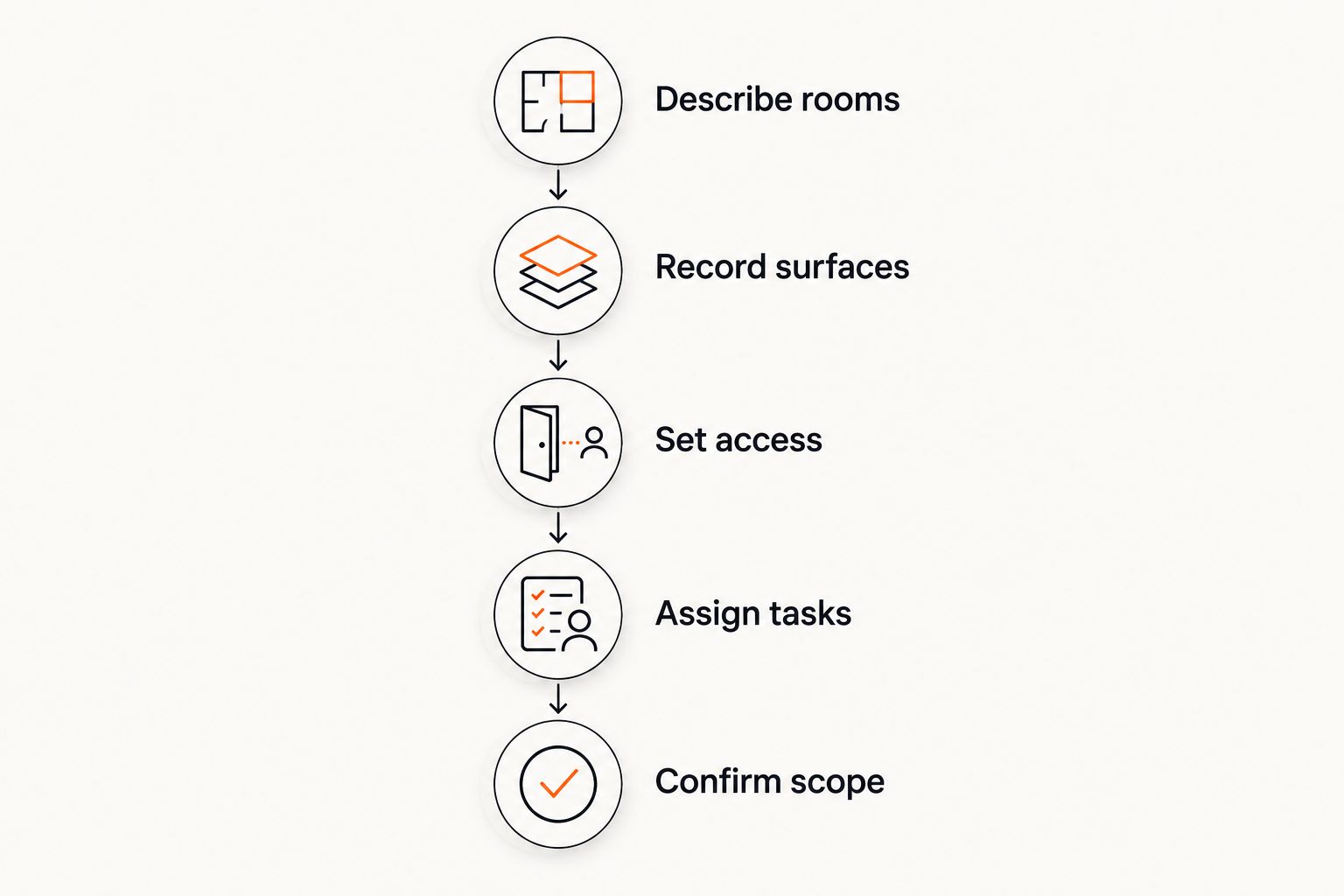
A useful 2026 job brief describes the surfaces and the household arrangements together. Follow these steps before asking painters to quote.
1. Describe rooms
List each room and the surfaces you want painted. Separate walls, ceilings, doors, frames and skirting boards rather than using a broad request such as painting the inside.
Name any rooms excluded from the job. If you are undecided about a surface, ask for it to be identified separately rather than leaving the painter to interpret your intentions.
2. Record surfaces
Take clear photos of each room and close-ups of visible peeling, cracks, stains or damaged areas. Include the surrounding surface so the painter can understand where the issue sits.
Photos help explain the job, but they do not replace any inspection the painter needs. Ask what preparation is included and which findings would require your approval for additional work.
3. Set access
Explain that you will remain in the home. State which rooms must stay accessible, where furniture can go and whether there is somewhere suitable for equipment between visits.
Mention pets, children and anyone who needs an unobstructed route through the house. Ask the painter to propose a work sequence that keeps household access separate from the active work area.
4. Assign tasks
Decide which clearing tasks you will complete before the painter arrives. Include furniture, wall decorations, curtains and loose belongings where they affect access.
Then ask the painter to confirm the remaining tasks. Do not remove electrical fittings yourself; identify anything that needs attention and confirm who is responsible for arranging appropriately licensed work.
5. Confirm scope
Send the same written brief to every painter you ask to quote. Keep the room list, preparation requirements and access arrangements consistent.
If a painter suggests a different sequence, ask for the change to be recorded. You can then decide whether the revised arrangement suits your household before comparing it with the other offers.
A clear brief also gives you a practical way to use QuickQuote: post the job for free, describe the occupied-home requirements and receive quotes from up to three local tradies. QuickQuote is a quote-matching marketplace, not the painting contractor; you choose who to hire, and there is no connection fee.
Post your painting job
Free to post. Receive quotes from up to three local tradies. You choose who to hire.
Post your jobWhat should you check before accepting a quote?
When comparing 2026 painting quotes, check the scope line by line before judging the total. Ask for clarification wherever one painter includes a task that another leaves unstated.
Use these checks:
- Surfaces: are the same walls, ceilings, doors and trims included?
- Preparation: are repairs and preparation described, rather than left as a general allowance?
- Paint system: are the specified products, preparation requirements and coats clear?
- Household tasks: who moves furniture, removes coverings and returns belongings?
- Access: does the quote reflect your room order and working windows?
- Completion: what cleaning, waste removal and final inspection are included?
A short quote is not automatically a poor quote. It does need enough detail to show what you are accepting.
Get any agreed clarification added to the written scope. An answer in conversation should not remain separate from the document you rely on when work begins.
What happens if you add work halfway through?
An occupied home makes it easy to notice another door or damaged wall while the painter is there. Treat that as a scope change, not an informal favour attached to the original job.
Before extra work starts, agree on the added surfaces, preparation, effect on the schedule and adjustment to the quote. Keep the approval in writing so neither side has to reconstruct the conversation later.
If clearing a room reveals previously hidden damage, ask the painter to explain what needs attention. Separate the newly identified work from the original scope before deciding how to proceed.
How do you keep the home usable during painting?
Agree on work zones, access routes and where materials will be stored. Keep children and pets away from active work areas, and follow the product safety instructions and the painter's advice about ventilation and re-entry.
Do not treat touch-dry paint as permission to push furniture against the wall. Ask when you can use the room, replace furnishings and clean the painted surfaces; those are different questions.
Before you accept a 2026 quote, confirm who makes the work area ready for household use at the end of each day. If daily pack-up is essential, make it a stated requirement rather than a request made after work starts.
Does moving furniture yourself change the quote?
Moving furniture yourself changes the painter's scope only when both of you agree on which tasks you will complete. Ask for the quote to state your responsibilities and the condition the room must be in when work starts.
Do not take on a task you cannot finish safely or on time. A clear division of work is more useful than promising to clear everything and leaving the painter without access.
Can you stay home while the interior is painted?
Staying home during interior painting requires an agreed access and room-use plan. Confirm which areas are out of use, how ventilation will be managed and what instructions apply before you enter a freshly painted space.
Tell the painter about household access needs before quoting. Do not assume that a room can be painted during the day and returned to normal use that evening.
Should you ask for room-by-room detail?
Room-by-room detail helps you check that every intended surface is included. It also makes exclusions visible when you are deciding whether to stage the job or leave some rooms untouched.
Ask the painter to identify optional work separately. That keeps a later decision about an extra room from becoming a disagreement about the original scope.
FAQ
What changes house painting cost when I still live at home?
Furniture handling, surface protection, restricted access and daily pack-up change the work included in an occupied-home painting quote. Give every painter the same room list and living arrangements so you can compare the scope fairly.
Do I need to empty every room before painting?
You need to clear each room to the level agreed with the painter, not assume every room must be empty. Confirm what can remain, how it will be protected and who moves it.
Is moving furniture included in a painting quote?
Furniture moving is included only if the quote says it is. Ask who moves large items, protects them and returns them after the room is ready.
Can I ask the painter to finish one room at a time?
You can request room-by-room staging before the painter quotes. Ask the painter to confirm the sequence and include the setup and pack-up needed between stages.
How long until I can use a freshly painted room?
Follow the paint manufacturer's instructions and the painter's advice before using a freshly painted room. Confirm re-entry, furniture placement and cleaning separately rather than relying on touch-dry appearance.
What should I include when I post a painting job?
Include the rooms, surfaces, visible damage, photos, furniture arrangements and access restrictions. State that you will remain at home and identify any rooms that must stay usable.
Does QuickQuote do the painting work?
QuickQuote is a quote-matching marketplace, not the painting contractor. Posting is free, there is no connection fee, and you can receive quotes from up to three local tradies while choosing who to hire.
One last thing
Ask what happens to the room at the end of the day, not just when the job is finished. That question exposes practical gaps: furniture left in walkways, equipment stored where you need access, or a room you expected to use overnight.
For your 2026 painting job, include that end-of-day requirement in the brief you post on QuickQuote. Then check that the painter's written scope reflects it before you hire.
Related guides

Connecting homeowners with trusted local tradies. Made in Sydney.