
7 questions to ask before replacing a hot water system 2026
Key questions to ask before replacing hot water system equipment: check repair first, compare installation scope and choose a tradie with a clear quote.
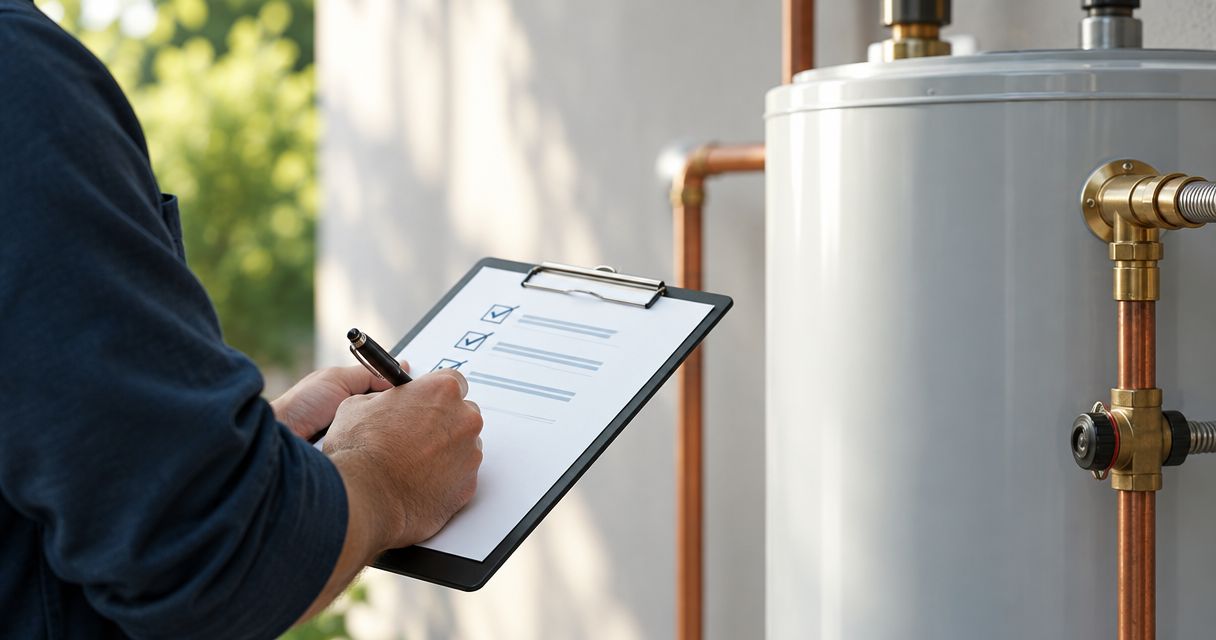
Ask whether replacement is necessary before choosing a new hot water system. These seven questions to ask before replacing hot water system equipment cover household demand, installation work and quote checks, so you can brief a tradie clearly in 2026.
TL;DR- Start your questions to ask before replacing hot water system equipment with whether repair is a sensible alternative.
- QuickQuote is best for homeowners seeking hot water replacement quotes from up to three local tradies.
- Compare system suitability, installation inclusions and exclusions before choosing who to hire.
- Ask for the exact model, site requirements and written approval process for extra work.
You can post your job on QuickQuote for free, with no connection fee, and receive quotes from up to three local tradies. You choose who to hire. The marketplace matches your job with tradies; it does not install the system.
Why this matters
A replacement quote needs to cover more than the hot water unit. Access, pipework, electrical work, removal and commissioning all belong in the discussion before you accept it.
For a 2026 replacement, separate the decision into two parts: which system suits your household, and what work your property needs. A suitable unit with an incomplete installation scope still leaves you comparing different jobs.
What makes a useful hot water replacement quote?
Use these checks before comparing recommendations:
- Clear diagnosis: The tradie explains why repair or replacement is recommended.
- Household fit: The recommendation reflects peak demand, not just the old tank’s size.
- Site fit: The proposed location, connections and access have been assessed.
- Defined scope: Supply, installation, removal and exclusions are written down.
- Accountability: You know who completes each part and provides the handover documents.
The best quote explains both the equipment and the work needed to install it. A model name alone is not a complete replacement plan.
The seven questions at a glance
Ask these questions in order. Each answers a different decision, so do not let a discussion about equipment skip over the condition of your existing system.
| Priority | Question | Best for | What the answer should establish | Limitation |
|---|---|---|---|---|
| First | Can the existing system be repaired? | Checking whether replacement is necessary | Diagnosis and reasons for the recommendation | A description alone does not replace inspection |
| Second | Which system type suits this property? | Comparing replacement options | Fit with services, location and household use | No type suits every property |
| Third | What size and output do we need? | Avoiding a repeat of supply problems | Peak demand and recovery needs | Tank capacity alone is incomplete |
| Fourth | What exactly does the installation include? | Comparing the same job | Written inclusions and exclusions | Unchecked site conditions leave gaps |
| Fifth | Who will do the work? | Checking responsibility | Relevant licences and coordination | One quote can involve several trades |
| Sixth | What happens if the job changes? | Controlling variations | Approval process for extra work | Hidden conditions need assessment |
| Seventh | What happens after installation? | Checking handover and support | Testing, documents and fault reporting | Product and workmanship cover differ |
1. Can the existing system be repaired instead?
Best for: checking whether you need a replacement at all.
Ask the tradie what has failed and how they reached that diagnosis. Describe the symptoms: no hot water, inconsistent temperature, visible leaking or a change in how the system operates. Do not diagnose the fault yourself.
Ask whether the proposed repair addresses the underlying problem, and what condition the rest of the system is in. If replacement is recommended, request a plain explanation of why repair is not the preferred option.
Repair pros:
- Keeps a serviceable system in use when the fault is repairable.
- Avoids changing the installation layout unnecessarily.
Repair cons:
- Repairing one fault does not renew the whole system.
- A repair does not address a system that no longer suits household demand.
Get the repair and replacement scopes in writing if both remain sensible options. That lets you compare an identified repair with a defined replacement, rather than two vague recommendations.
Verdict: Hold approval until the diagnosis and reason for replacement are clear.
2. Which system type suits this property?
Best for: narrowing the choice before discussing individual models.
Ask the tradie to explain the suitable options for your existing services, proposed location and hot water use. Do not assume a like-for-like replacement is the only option, or that switching technology is automatically the better choice.
This 2026 comparison is a starting point for questions, not a recommendation for a particular property.
| Option | Best for investigating | Practical advantage | Limitation to check |
|---|---|---|---|
| Electric storage | Homes considering a storage-based replacement | Stores heated water for later use | Stored supply and reheating must match demand |
| Heat pump | Homes assessing a different electric heating method | Transfers heat from surrounding air into water | Location, airflow and operating noise need assessment |
| Gas continuous flow | Homes assessing on-demand gas heating | Heats water as it flows through the unit | Gas supply and simultaneous demand need checking |
| Solar hot water | Homes assessing roof-based water heating | Uses a solar collector to heat water | Roof suitability and boosting arrangements need assessment |
Ask for the exact proposed model and its installation requirements. A category description such as “heat pump” does not tell you whether the selected equipment suits your site.
Verdict: Hold the model choice until the tradie explains the property-specific advantages and limitations.
3. What size and output does our household need?
Best for: matching the replacement to your busiest period.
Tell the tradie how many people live at home and when hot water demand overlaps. Include showers, baths and other relevant hot water use. Explain what the current system handles well and where it falls short.
For example, a household with 4 people and 2 bathrooms should explain whether both showers run together. That describes demand more clearly than saying the home needs a larger tank. These are example briefing details, not sizing recommendations.
Ask how the proposed system handles your peak use and what happens after a period of heavy demand. Storage capacity, heating performance and simultaneous flow answer different questions.
Demand-based sizing pros:
- Connects the recommendation to how you actually use hot water.
- Gives the tradie a reason to explain the selected model.
Demand-based sizing cons:
- An incomplete household brief leaves the recommendation based on assumptions.
- Future changes need to be discussed separately from current demand.
Mention planned bathroom changes or household changes before the quote is finalised.
Verdict: Hold approval until the sizing explanation matches your household’s use.
4. What exactly does the installation include?
Best for: comparing quotes that cover the same work.
Ask each tradie to separate equipment supply from installation tasks. For your 2026 quote comparison, use the same checklist for every proposal rather than comparing the final line alone.
Confirm whether the scope includes:
- Disconnecting and removing the existing system.
- Taking the old unit away for disposal.
- Positioning and supporting the replacement.
- Required pipework, valves, insulation and drainage work.
- Electrical or gas work relevant to the selected system.
- Testing, commissioning and explaining normal operation.
Ask which existing fittings will be reused and why they are suitable. If work is excluded, ask who must arrange it and whether it needs to happen before installation.
Detailed-scope pros: You can identify differences and ask focused follow-up questions.
Detailed-scope cons: A written scope still needs to reflect the actual site; photographs do not resolve every installation question.
Use the guide to hot water replacement quote inclusions to check the proposals side by side.
Verdict: Hold any quote that leaves removal, connections or commissioning unclear.
5. Who will do the work, and what licences apply?
Best for: knowing who is responsible for each part of the installation.
Ask who will carry out the plumbing and any electrical or gas work. Confirm the relevant licence details and check them with the licensing authority for your state or territory. Requirements depend on the work and jurisdiction.
If several trades are involved, ask who coordinates them. You need to know whether the quote covers the complete job or only one part of it.
Coordinated-job pros:
- Gives you a clear contact for arranging the work.
- Makes dependencies between trades easier to identify.
Coordinated-job cons:
- A single contact does not remove the need to confirm who performs regulated work.
- Separate contractors need clearly allocated responsibilities.
QuickQuote is a hot water quote-matching marketplace, not the contractor doing the installation. You choose who to hire after checking the proposed work and the tradie’s details.
Verdict: Hold booking until responsibility for every trade task is clear.
6. What happens if the installation needs extra work?
Best for: keeping control when the agreed scope changes.
Ask what the tradie needs to inspect before confirming the installation scope. Tight access, a different system location or connections that need alteration should be discussed before you accept the quote.
Agree on a written process for variations. Separate a necessary change discovered on site from an optional improvement you request during the job.
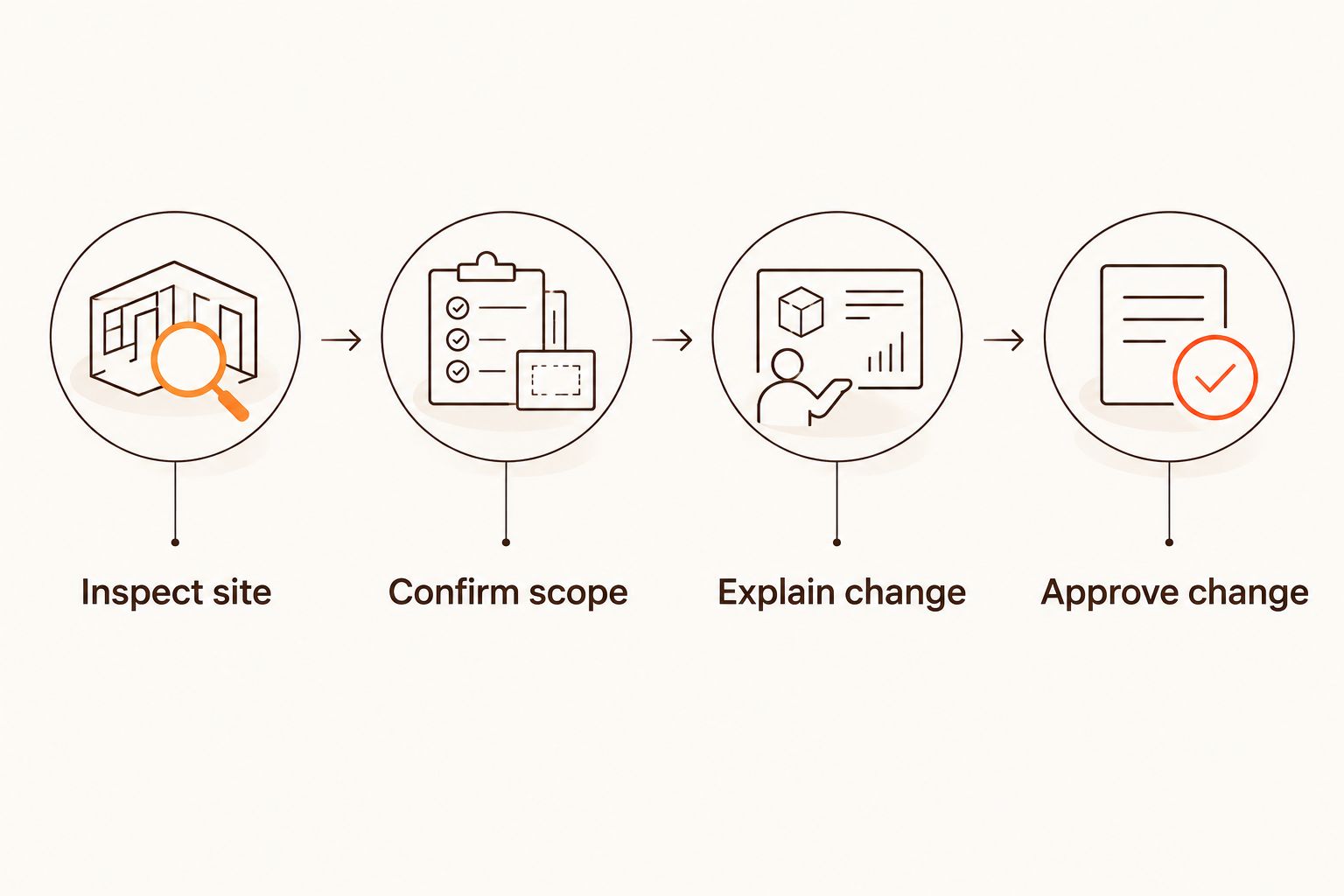
Use this sequence:
- Inspect site: Identify what can be checked before work starts.
- Confirm scope: Record the agreed installation and exclusions.
- Explain change: Describe any additional work and its reason.
- Approve change: Get your approval before proceeding with the variation.
Written-variation pros: You retain a record of what changed and what you approved.
Written-variation cons: A process does not remove hidden site conditions; it controls how the response is agreed.
Verdict: Hold extra work until the change and your approval are recorded.
7. What happens after the system is installed?
Best for: making sure the job ends with a proper handover.
Ask how the installer will test the system and explain its operation. Request the model details, operating instructions and any installation or compliance documents required for your job.
Clarify the difference between the manufacturer’s product warranty and the installer’s workmanship arrangements. Ask who to contact for a leak, a fault or an installation concern, and what documents to keep.
Clear-handover pros:
- Gives you operating instructions and a named contact.
- Keeps equipment and installation records together.
Clear-handover cons:
- Warranty terms differ between products and providers.
- Handover documents do not replace reading maintenance requirements.
For a replacement completed in 2026, save the accepted quote, approved variations and handover records together. Ask about any maintenance obligations before you agree to the installation, not after a problem appears.
Verdict: Hold final sign-off until the agreed testing and handover are complete.
How these questions are ordered
The order follows the decision: establish the fault, choose a suitable system, define the installation, then confirm responsibility and handover. It is not a ranking of manufacturers or a claim that one technology wins everywhere.
Which replacement should you choose?
Choose the system that fits your household and site, supported by a clear installation scope. If two tradies recommend different options, ask each to explain the difference using the same household brief.
For a practical job post, include:
- Your suburb and property type.
- Existing system type and readable model details.
- Symptoms and whether hot water is still working.
- Household size and overlapping hot water use.
- Photos of the unit, connections, surrounding space and access.
- Whether you want a like-for-like option, alternatives or both.
For example, say that 1 shower runs at a time if that reflects normal use. Concrete details help more than asking for “a standard replacement”.
QuickQuote is best for homeowners seeking hot water replacement quotes from up to three local tradies. Posting is free, there is no connection fee, and you decide who to hire.
Post your hot water job
Free to post. Receive quotes from up to three local tradies. You choose who to hire.
Post your jobFAQ
What are the most important questions to ask before replacing a hot water system?
Start with whether the existing system can be repaired, which replacement suits your household, and what installation work is included. Then confirm sizing, trade responsibilities, variations and handover.
Should I replace my hot water system with the same type?
Do not assume the same type is the right choice. Ask the tradie to assess your household demand, existing services and installation location before recommending a replacement.
Is a heat pump better than an electric storage system?
Neither is automatically the better choice for every property. Compare the proposed models against household demand, installation requirements, location and operating conditions.
Can a tradie give a final replacement quote from photos?
Ask the tradie whether the photos establish enough detail for a firm quote or whether a site inspection is needed. Confirm any assumptions about access, connections and additional work in writing.
Does a hot water replacement quote include removing the old tank?
Only treat removal and disposal as included when the written quote says so. Ask about both, because disconnecting the old unit and taking it away are separate tasks.
Do hot water replacement rules differ across Australia in 2026?
Requirements depend on your state or territory and the work involved. Ask the installer which licensing, installation and documentation requirements apply to your job.
How does QuickQuote help with hot water replacement?
QuickQuote lets you post your hot water job for free and receive quotes from up to three local tradies, with no connection fee. It is a quote-matching marketplace, and you choose who to hire.
One last thing
Photograph the old system’s model plate before it is removed. Keep that image with the replacement documents so you retain a record of both systems, rather than losing the old details on installation day.
Related guides

Connecting homeowners with trusted local tradies. Made in Sydney.