
Replacing hot water: how to compare a heat pump and storage system
Compare hot water system replacement cost for heat pump and electric storage systems. Check installation extras, running costs and the scope before hiring.

Compare hot water system replacement cost using written quotes for the same household needs, then check installation work, electricity use and site suitability before choosing a heat pump or electric storage system. A unit-only figure leaves out work such as electrical changes, pipework and removing the old tank, so compare the complete replacement job rather than the appliance alone.
TL;DR- Compare hot water system replacement cost using complete installation scopes, not appliance-only figures.
- Heat pumps use ambient air to heat water; electric resistance storage systems heat water with an element.
- Check tank capacity, recovery, location, electrical work and exclusions before accepting either quote.
- QuickQuote suits homeowners comparing quotes from up to three local tradies while keeping control over hiring.
Why this matters
A heat pump and a conventional electric storage system can both supply stored hot water, but they heat it differently. That difference affects the questions you should ask about the installation and ongoing electricity use.
For a replacement planned in 2026, start with the existing setup rather than a preferred appliance. Photograph the tank label, the surrounding space and the access route. The hot water replacement quote inclusions guide helps you check whether each tradie has allowed for the same work.
A lower quote is not a better comparison if it leaves necessary work outside the scope. Ask for the missing items before deciding which system offers better value for your home.
Replacing hot water: how do you compare a heat pump and storage system?
Compare these 2 system types against the same hot-water demand and installation conditions. Here, “electric storage” means a tank heated by an electric resistance element. A heat pump commonly stores heated water in a tank too; storage alone does not distinguish the systems.
| What to compare | Heat pump hot-water system | Electric resistance storage system |
|---|---|---|
| How it heats water | Transfers heat from surrounding air into the water | Uses an electric element to heat the water |
| Best for | Homes with a suitable installation location and a focus on reducing electricity used for water heating | Homes considering an element-heated tank, especially where the existing setup suits replacement |
| Main advantage | Uses ambient heat rather than relying only on resistance heating | Can suit an existing electric storage arrangement without changing the heating approach |
| Main limitation | Needs attention to airflow, operating noise, drainage and model requirements | Resistance heating generally uses more electricity than a suitable heat pump for equivalent water heating |
| What the quote must clarify | Model, capacity, location, drainage, electrical work and removal | Model, capacity, electrical compatibility, plumbing work and removal |
| What needs a separate check | Suitability for local conditions and the proposed position | Whether the existing circuit, fittings and location remain suitable |
These are selection checks, not a substitute for a site assessment. Ask the installer to explain why the proposed system suits your household, rather than accepting a recommendation based only on tank size.
Heat pump: best for a suitable site and lower electricity use
A heat pump is worth comparing when you want to reduce the electricity used to heat water and have a suitable place to install it. Its operation depends on the selected model, surrounding conditions and how your household uses hot water.
The trade-off is installation detail. Ask about airflow clearances, sound near bedrooms or neighbours, condensate drainage and any backup heating. Choose a heat pump only after the installer confirms that the proposed location meets the model’s requirements.
Electric storage: best for assessing a familiar replacement setup
An electric resistance storage system is worth comparing when your home already uses one and you want to understand the work involved in replacement. Keeping the same heating method does not automatically mean the old connections or tank position can stay unchanged.
The trade-off is electricity use. Ask about the proposed tank’s heating arrangement and suitability for your electricity supply, then compare ongoing use separately from installation. A simpler-looking replacement still needs a complete written scope.
What should your replacement quote include?
Use the same job description for both options in 2026. Ask each tradie to separate the appliance from installation work and identify anything that needs inspection before the quote becomes firm.
Identify the exact appliance
Request the manufacturer, model and tank capacity. A description such as “supply and install hot-water system” gives you too little information to check suitability, warranty terms or whether competing quotes describe comparable equipment.
Ask how the proposed capacity and recovery performance match your household. Tell the tradie about consecutive showers, baths and any periods when several people need hot water close together. Household headcount alone does not describe that demand.
Define the installation work
The quote should say whether the tank stays in its current position and which plumbing connections will change. Ask about the base, valves, insulation, drainage and any work needed to reach the proposed location.
For a heat pump, include the installer’s checks on airflow and condensate disposal. For either option, identify electrical work explicitly. Do not assume a plumbing quote includes an electrician or changes to the existing circuit.
Close out the old system
Ask whether disconnecting, removing and disposing of the old tank are included. Mention stairs, narrow side access or any other obstacle before the tradie prepares the quote.
Also ask how the installer will test operation and explain the controls before leaving. Keep the model details, invoice and warranty documents together so you can identify the installed system later.
Why hot water replacement quotes vary
Differences between quotes often come from differences in the proposed job. Check these factors before treating the totals as comparable:
- System and capacity: The heating method, model and tank capacity change what is being supplied. Compare suitability, not just the system name.
- Existing connections: Pipework, fittings and electrical arrangements need checking against the replacement system’s requirements.
- Installation location: Moving the tank changes the scope. A heat pump also needs a suitable position for airflow, sound and drainage.
- Access and removal: The route for taking out the old tank and bringing in the replacement belongs in the job description.
- Additional trades: Electrical changes or other work outside the installer’s scope need a clear allowance or separate quote.
- Conditions and exclusions: A quote subject to inspection is different from one that covers an assessed installation. Ask what remains unresolved.
Do not assume a 2026 incentive applies to your property or chosen model. Check current official program rules and ask the installer to show any eligibility conditions separately from the underlying installation scope.
How do you compare the quotes fairly?
Use 1 written scope for every tradie. Keep the requested outcome fixed, then ask each installer to explain any proposed changes rather than silently quoting a different job.
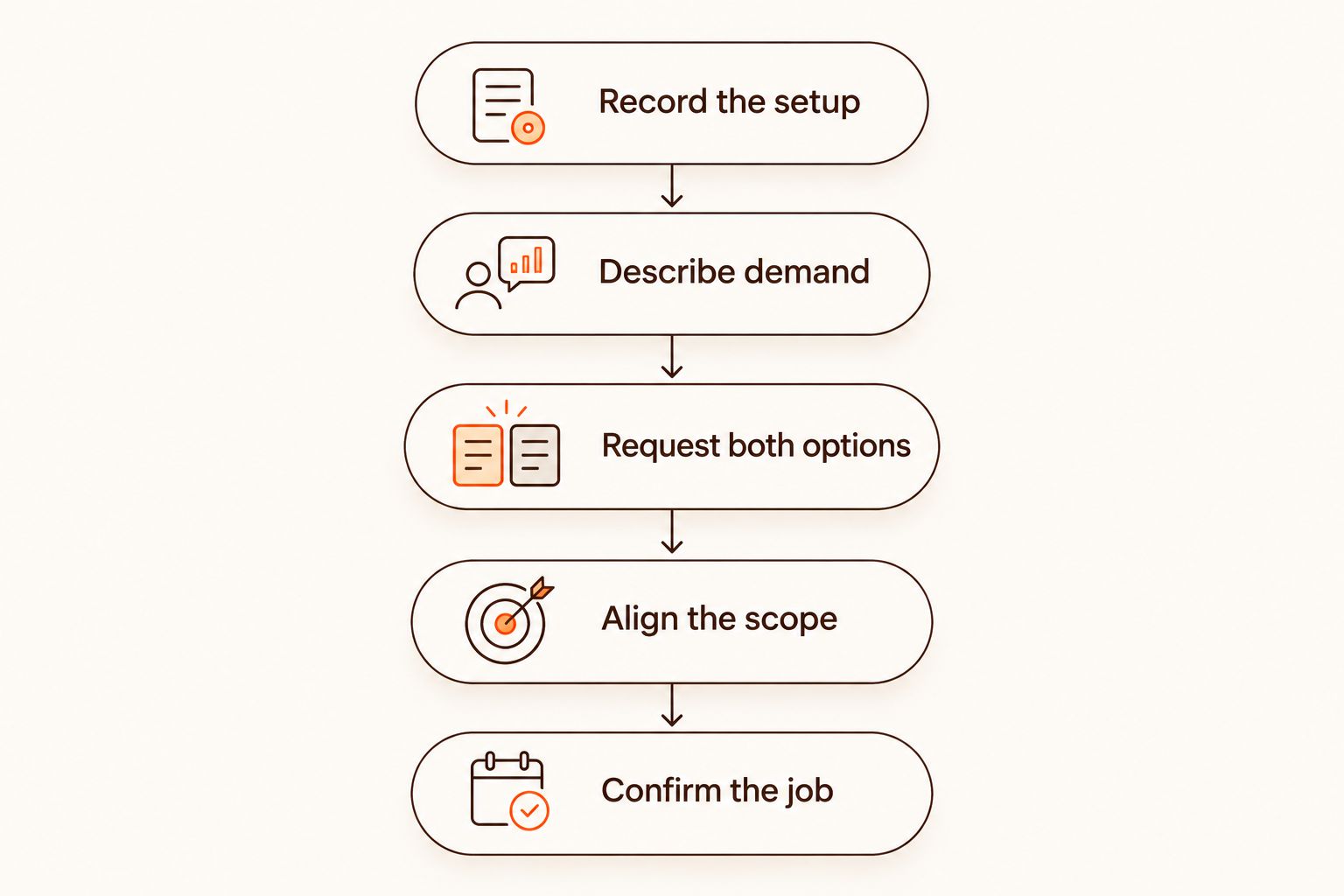
- Record the setup. Note the current heating type, tank label, location and access. Describe whether the system has failed or still provides hot water.
- Describe demand. Explain shower patterns, baths and busy periods. Tell the tradie what your current system fails to handle.
- Request both options. Ask for a heat pump and electric resistance storage assessment where both are suitable. Require an explanation if either is ruled out.
- Align the scope. Check removal, plumbing, electrical work, drainage and testing line by line. Ask for exclusions in writing.
- Confirm the job. Agree on the chosen model, installation location and how additional work will be approved before accepting the quote.
The order matters: establish the household need before choosing equipment, and resolve exclusions before hiring. A written comparison is easier to check than separate phone conversations about different installations.
Use these 3 quote checks before accepting
- Same outcome: Does each system cover the household demand you described?
- Same boundaries: Does each quote include the necessary work, or clearly identify separate work?
- Clear approval: Does the quote explain how changes will be discussed and approved?
If a tradie recommends a different tank or installation position, ask what problem that change solves. The answer should relate to your home and usage, not simply to the equipment being offered.
How should you compare running costs in 2026?
Compare running costs using the exact proposed models and your electricity arrangement. A heat pump’s heating method offers an electricity-use advantage over resistance heating, but that does not establish a household-specific bill saving.
Ask what the estimate assumes about hot-water demand, operating conditions and heating times. Check whether it accounts for backup heating where the model uses it. An estimate with no stated assumptions is not a sound basis for choosing equipment.
If you have rooftop solar or a controlled-load arrangement, ask how the proposed system will operate with it. Do not assume daytime heating, timers or existing tariff arrangements suit every installation. Confirm the setup with the relevant installer and electricity provider.
Keep installation scope and running-cost estimates separate. You need both to make a decision, but an attractive operating estimate does not resolve missing electrical work or an unsuitable tank location.
Is a heat pump worth choosing over electric storage?
A heat pump is worth choosing when the site suits the model, the system meets your household’s demand and the installation scope is clear. Its electricity-use advantage is a reason to compare it, not a reason to skip the site checks.
Electric storage remains an option to assess against the same needs. Ask the installer to explain the consequences of keeping resistance heating, including how the proposed system will operate with your electricity arrangement.
The useful verdict is specific to the job: choose the system that meets demand in a suitable location with understood installation work. Do not choose solely because a quote uses terms such as efficient, straightforward or like-for-like.
Can you replace the tank without changing anything else?
Replacing the tank does not establish that the existing plumbing and electrical setup can remain unchanged. The installer needs to check the selected system against the site and applicable installation requirements.
Ask which existing components will be reused and why they are suitable. Where an item needs inspection, get that condition written into the quote rather than treating it as included work.
For a replacement in 2026, photographs help describe the job, but they do not replace checks that require access to the property. Agree on how any unresolved site conditions will be handled before work starts.
What should you put in your job post?
Give tradies enough information to assess the work without guessing. Include your suburb, current heating type, tank-label photos, access photos and a plain description of your household’s hot-water use.
State whether you want to compare both heating methods. Mention any proposed relocation, known electrical concerns and whether you need the old tank removed. If you do not know a detail, say so rather than selecting an answer that sounds likely.
A useful job description reads like this:
Replace the existing hot-water system at my home. Please assess a heat pump and electric resistance storage option, explain the recommended capacity, and identify plumbing and electrical work. Include old-tank removal, exclusions and any site checks needed before confirming the quote.
QuickQuote is best for homeowners who want to compare quotes from up to three local tradies and choose who to hire. It is a quote-matching marketplace, not the contractor carrying out the installation.
Posting through QuickQuote is free, with no connection fee. Up to three local tradies is a limit, not a promise that every job will receive three quotes; you remain in control of hiring.
Post your hot-water replacement job
Free to post, no connection fee, and quotes from up to three local tradies. You choose who to hire.
Post your jobFAQ
What should hot water system replacement cost include?
Hot water system replacement cost should cover the selected appliance and the agreed installation work. Check plumbing, electrical work, old-tank removal, testing and exclusions before comparing quotes.
Is a heat pump also a storage hot-water system?
A heat pump commonly heats water stored in a tank. The useful comparison here is between heat-pump heating and electric resistance heating, not between having a tank and having no tank.
Is a heat pump better than electric storage for my home?
A heat pump is better suited to homes where the proposed model meets demand and has a suitable installation location. Compare its electricity use and installation requirements against the electric storage option before deciding.
Can I keep my existing hot-water electrical circuit?
Keeping the existing circuit depends on whether it suits the replacement system and installation requirements. Ask the installer to identify the electrical checks and any separate electrical work in the quote.
Should old-tank removal be included in the quote?
Old-tank removal should be explicitly included or excluded in the written quote. Tell the tradie about stairs, narrow access and other obstacles before the scope is agreed.
How do I check a hot-water rebate in 2026?
Check a hot-water rebate against current official program rules, your property and the exact proposed model. Ask the installer to identify eligibility conditions and keep the underlying installation scope clear.
Does QuickQuote guarantee three hot-water quotes?
QuickQuote offers quotes from up to three local tradies, not a guarantee of three responses. Posting is free, there is no connection fee, and the homeowner chooses who to hire.
One last thing
Ask what happens if the old tank is disconnected and the replacement cannot proceed as planned. Get a clear answer about who contacts you, how changed work is approved and what remains outside the original scope.
That question tests whether the installation plan is clear. Resolve the unknowns before the old system comes out, not after.
Related guides

Connecting homeowners with trusted local tradies. Made in Sydney.